Published October 14, 2026
By Anthony Pennacchi & Sons Team
Anthony Pennacchi & Sons Blog
Is Dry Season the Right Time for Chimney Restoration in South Florida?
Repointing, patching and sealing all hold better in dry weather. Getting the chimney looked at now means the work is scoped and ready when conditions allow.
The Short Answer
Yes. The dry season is the best time for chimney masonry restoration in South Florida. Mortar repointing, masonry patching and protective surface treatment all bond and cure better with low humidity and little rain. The useful thing to do before then is have the chimney assessed, so the scope is defined and the work can be scheduled when the weather turns. If the chimney is already letting water into the house, that changes the answer, and it is covered below.
How South Florida Chimneys Deteriorate
South Florida chimneys do not see the freeze-thaw cycles that break down masonry in colder states. They wear out through long exposure to moisture and sun.
Heavy wet-season rain drives water into any open crack or joint in the chimney. Swings between hot days and cooler nights keep the mortar joints moving, which slowly opens them. Near the coast, salt air speeds up mortar breakdown and can corrode metal built into the chimney.
The damage adds up quietly. It is often hard to see from the ground until the joints have opened enough to let water into the chimney and from there into the house.
What Dry Weather Does for Chimney Masonry Work
Chimney restoration usually comes down to three tasks, and each one depends on dry conditions:
Repointing Mortar Joints
Old, deteriorated mortar is cut out and replaced. New mortar packed into a joint that still holds moisture from recent rain does not form a proper bond with the masonry around it.
Patching Damaged Masonry Faces
Spalled or broken masonry faces are repaired. Patching compounds applied to a damp surface may seem to set, but the bond is weaker and the patch fails sooner.
Protective Surface Treatment
A breathable protective treatment goes over the restored masonry. It needs a dry surface to penetrate and cure.
The dry season brings lower humidity, fewer rain days and moderate temperatures, so mortar and repair materials can cure at the right pace and bond properly. That gives the repair its best chance of holding through the wet seasons that follow.
What to Look for on Your Chimney Now
Checking the chimney before the dry season means the scope is known and ready to schedule. These are the conditions worth looking for:
- Open or crumbling mortar joints on any side of the chimney
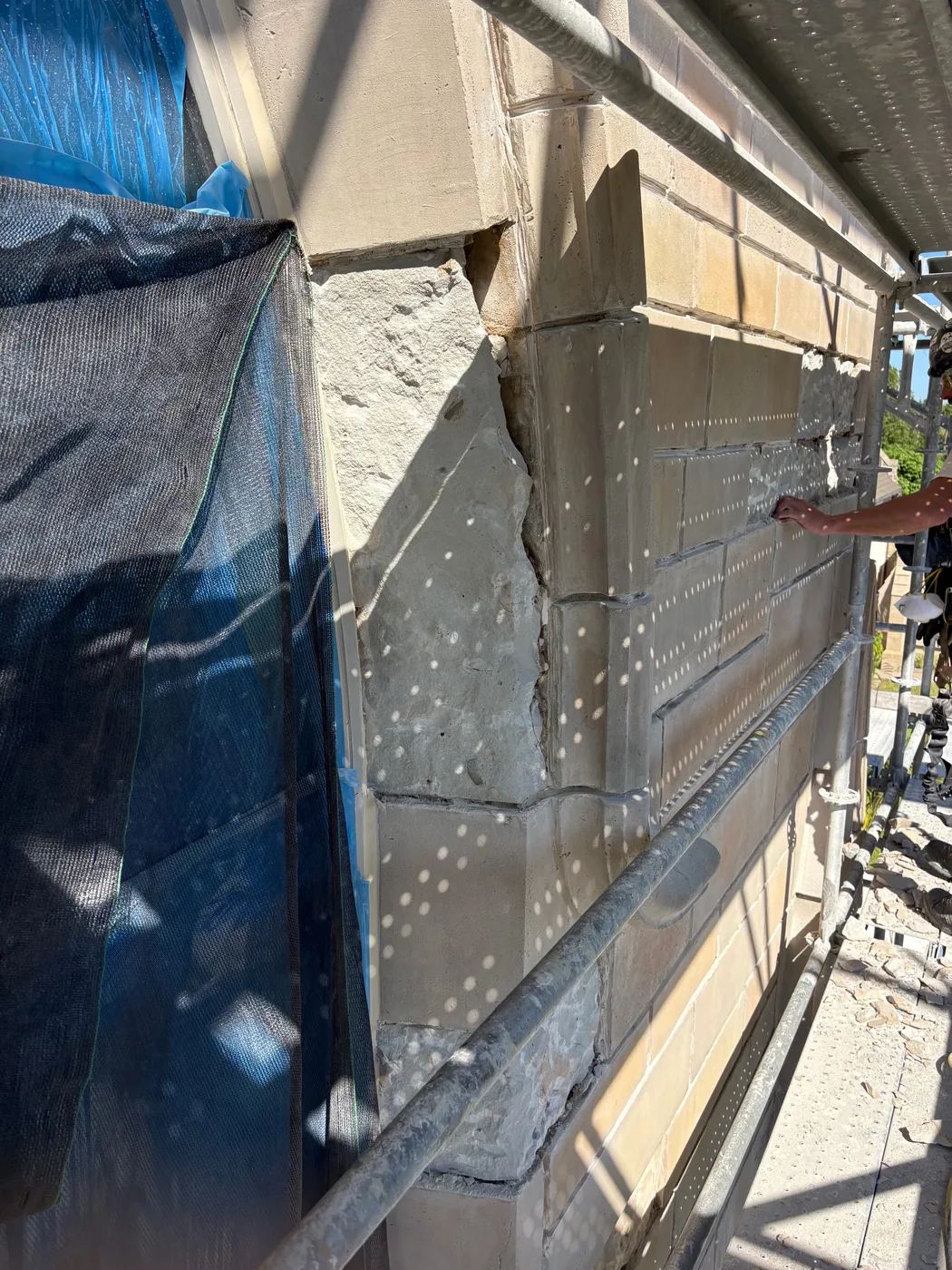
- Spalling, flaking or pitting on the face of the masonry
- White powder deposits on the outside, known as efflorescence
- Staining, streaking or biological growth on the masonry
- Masonry that has shifted or sits out of line with the rest of the chimney
- Cracks or damage at the chimney crown or cap
- Ceiling or wall staining near the chimney that shows up after rain
Not every one of these needs emergency work. An assessment separates the conditions that need attention now from the ones that can be scheduled for the dry season.
Act Now or Wait for Dry Season: How to Decide
The deciding question is whether water is getting into the house.
A chimney with worn mortar and minor surface damage, and no interior staining or leaks, is a good candidate for dry-season scheduling. Waiting for better conditions gives a more durable repair.
A chimney that is already causing interior staining after rain, or has joints open far enough to see gaps through the masonry, should be looked at now. Every additional storm adds to the damage before restoration starts, and interior surfaces that have soaked up water will need their own attention either way.
Anthony Pennacchi & Sons has been doing masonry work since 1947, and an assessment of the chimney makes it clear which of these situations you are in.
Book a Chimney Masonry Assessment
If your South Florida home has a chimney showing any of the signs above, Anthony Pennacchi & Sons can assess its condition and define the restoration scope before the dry season, with the scope and price set out in a written proposal. Call (561) 475-0775 to arrange a visit, or see our residential masonry restoration page for more on the work.
Frequently Asked Questions
Does the Type of Mortar Used in Chimney Repointing Affect How Long the Repair Lasts?
Yes. Repointing mortar should match the existing masonry in hardness and porosity. A mortar harder than the masonry around it can force the brick or block to crack and spall over time instead of letting the joint take the movement. Anthony Pennacchi & Sons is Jahn Applicator certified for period-sensitive masonry restoration, which is built on matching repair mortar to the original material. On South Florida chimneys the mix also has to stand up to sun and, near the coast, salt air.
Can a Chimney Crown or Cap Be Repaired Separately From the Masonry Below It?
Often, yes. The crown or cap at the top of the chimney is a common point of water entry and is frequently the first part to deteriorate. If the crown is cracked or damaged but the masonry below is still in reasonable shape, repairing the crown on its own can be a sensible approach. An assessment shows whether the crown is the main problem or whether the masonry needs work too.
How Do I Know If Water From My Chimney Has Reached the Structure?
Interior staining on ceilings or walls near the chimney is the clearest sign, especially staining that appears or gets worse after rain. A damp or musty smell near the chimney can point to moisture that is not visible yet. Either one is a reason to have the chimney masonry checked from the outside to find where the water is getting in. Call Anthony Pennacchi & Sons at (561) 475-0775.