Published October 28, 2026
By Anthony Pennacchi & Sons Team
Anthony Pennacchi & Sons Blog
Resurface or Replace: How South Florida Property Owners Should Decide on Concrete
Resurfacing works when the damage is limited to the surface and the concrete underneath is sound. When the steel inside has started to corrode, the usual answer is concrete repair: cut out the damaged concrete, treat or replace the steel, and rebuild. Replacement is for slabs with cracks through their full depth or damage spread so far that repair is no longer practical. Anthony Pennacchi & Sons can inspect the concrete and tell you which path fits: (561) 475-0775.
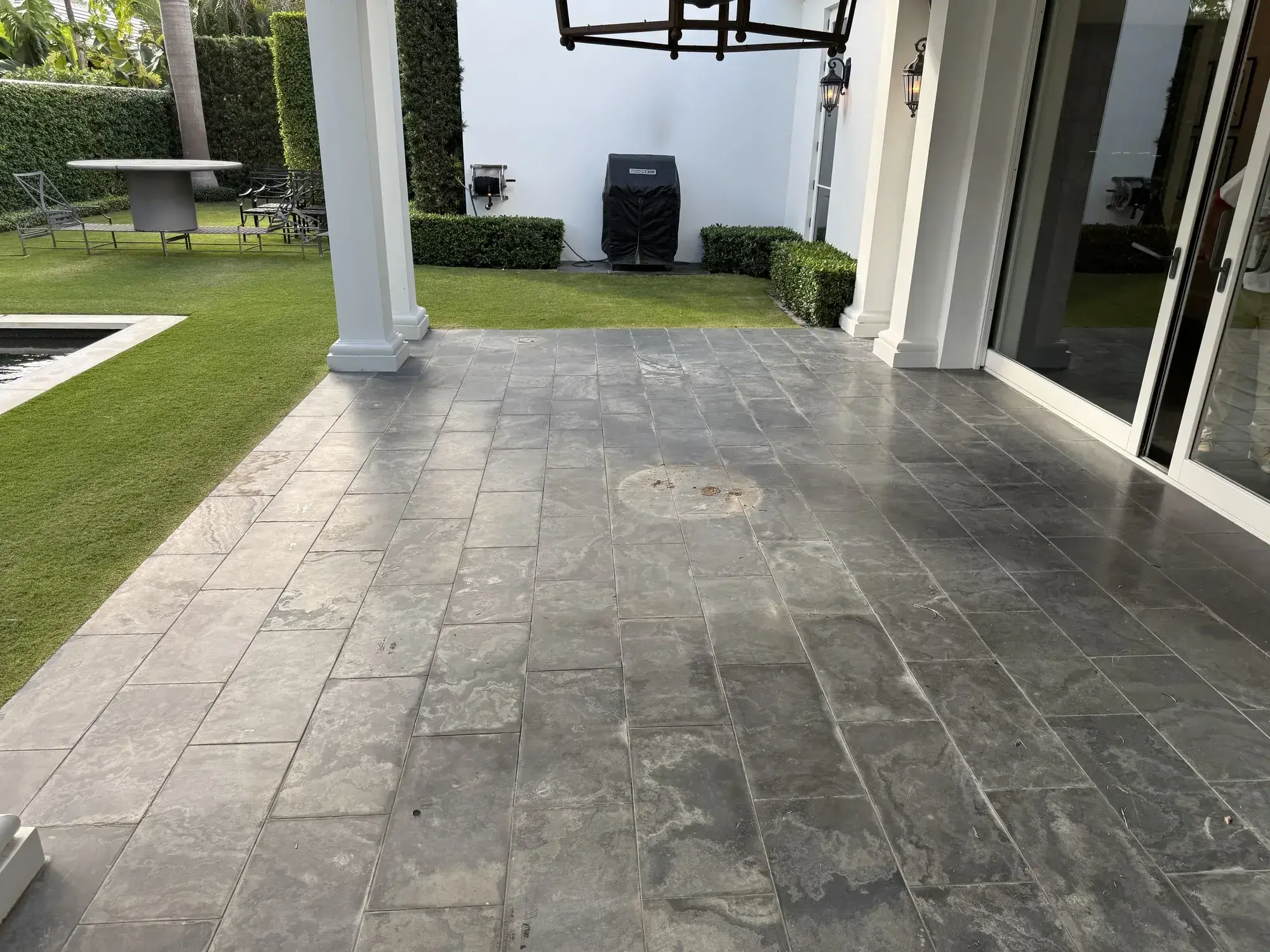
Why Concrete Deteriorates Faster Near the Coast
Salt in the air and in rainwater works its way into concrete over time. When enough chloride reaches the reinforcing steel, the steel starts to rust. Rust takes up more room than the steel did, so it pushes the concrete apart from the inside, which is what spalling is. That is why spalling is such a familiar problem on coastal South Florida properties.
Balconies, pool decks and elevated slabs are exposed on more sides and take more direct weather than a slab on grade, so they are worth checking first. The balcony repair or waterproofing guide covers balconies in more detail.
When Resurfacing Is the Right Call
Resurfacing fits when the damage is cosmetic or shallow: surface cracking, light pitting or discoloration with no exposed or corroding steel underneath.
Signs Resurfacing Will Hold
- Hairline surface cracks with no exposed steel
- Minor pitting or surface wear
- No rust staining bleeding through the concrete
- The slab sounds solid when tested, not hollow
Resurfacing restores the surface and adds protection without removing sound concrete.
When the Concrete Needs Repair First
Rust stains, exposed steel and hollow-sounding patches mean the problem is inside the concrete. Resurfacing over that traps the corrosion under a new finish, and it keeps working until the new surface cracks too.
In many cases the damage is localized. The damaged concrete is removed back to sound material, the steel is cleaned, treated or replaced, and the area is rebuilt. The slab can then be resurfaced so it looks uniform.
When Replacement Is the Right Call
Replacement makes sense once the damage is too deep or too widespread for repair to be practical.
Signs Replacement Is Needed
- Cracks that run through the full depth of the slab
- Spalling and delamination spread across most of a section rather than isolated spots
- Corrosion so extensive that repair would remove most of the concrete anyway
Anthony Pennacchi & Sons covers resurfacing, repair and replacement scopes through its residential concrete restoration work.
What a Concrete Inspection Checks
A useful inspection goes past a visual look at the cracks.
- Sounding the surface to find hollow or delaminated areas
- Looking for exposed or corroding steel and rust staining
- Checking how deep and how far existing cracks run
- Judging whether corrosion has already reached the steel
That is how you find out whether resurfacing will hold, whether repair is needed first, or whether replacement is the better use of your money. Pricing follows that in-person inspection, with a written proposal that states the scope and one total.
Talk to Us About Your Concrete
Anthony Pennacchi & Sons works with South Florida property owners on concrete resurfacing, repair and replacement from its Palm Beach office, across Palm Beach County and Broward County. Anthony Pennacchi & Sons is licensed and insured, Florida license CGC1538576, and has been a family company since 1947. Call (561) 475-0775 to schedule an inspection.
Frequently Asked Questions
Can Resurfacing Be Used Over Cracked Concrete?
Only when the cracks are at the surface and the steel underneath is not exposed or corroding. Cracks that run through the slab, or any sign of rusting steel, need repair or replacement first. Anthony Pennacchi & Sons checks for both before recommending resurfacing.
How Long Does Resurfaced Concrete Last in South Florida?
There is no single answer. It depends on the condition of the concrete underneath, the product used, how the surface was prepared, and how much sun, salt and traffic it takes. The biggest factor is what was under it: resurfacing over sound concrete holds far better than resurfacing over hidden corrosion, which is why the inspection comes first.
Does Spalling Always Mean the Concrete Needs Replacement?
No. Spalling in isolated spots is often handled with concrete repair: removing the damaged concrete, treating the steel and rebuilding the area. Replacement is for spalling spread so widely, or so deep, that repair is no longer practical.
Is an Inspection Necessary Before Choosing Resurfacing or Replacement?
Yes. Cosmetic wear and advanced corrosion can look similar on the surface. An inspection by Anthony Pennacchi & Sons confirms which one you have before you pay for a scope. Call (561) 475-0775.