Published March 1, 2026
By Anthony Pennacchi & Sons Team
Anthony Pennacchi & Sons Blog
Bell Tower Masonry Repair | What Managers Must Know
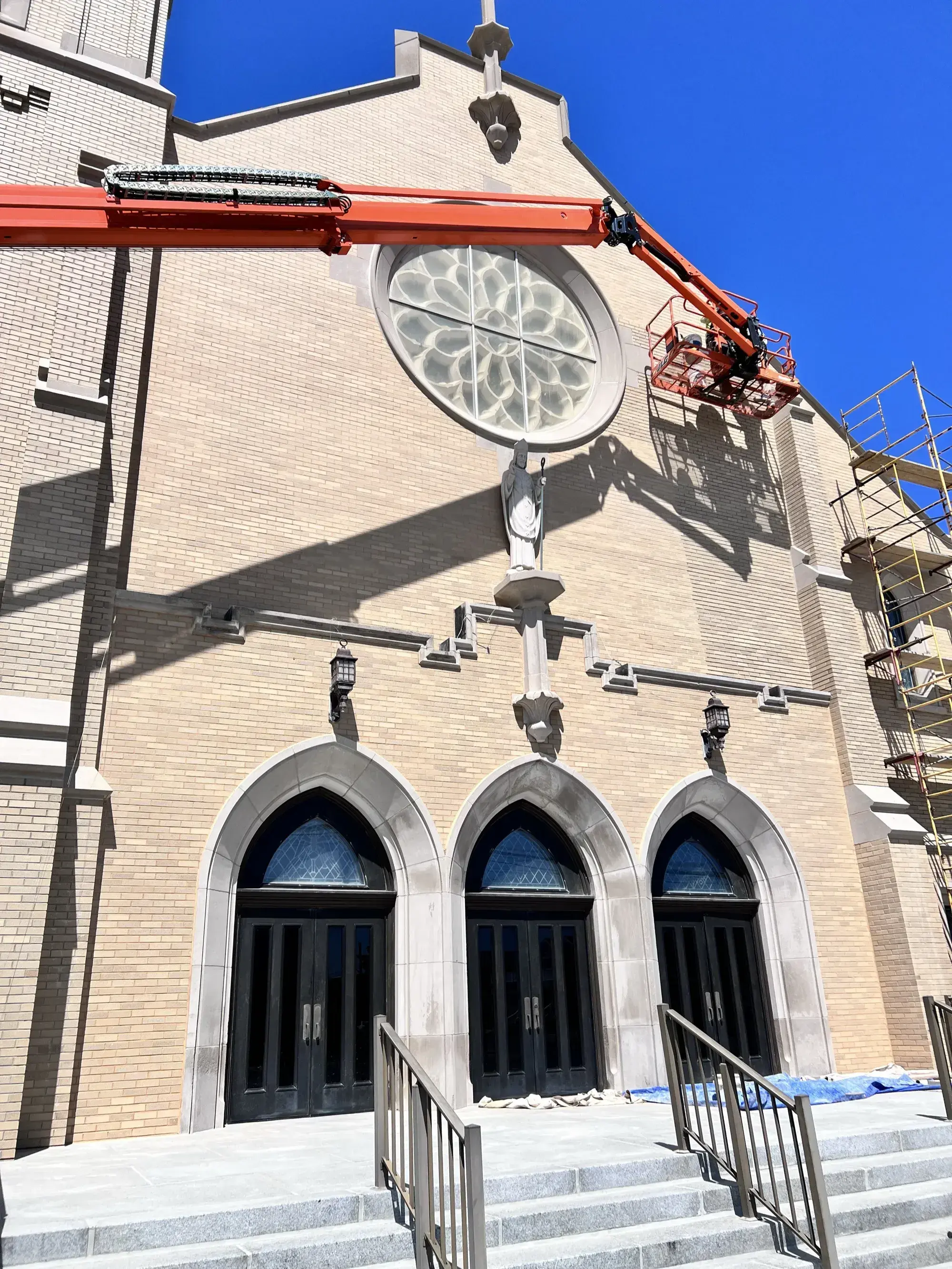
Most churches wait until mortar falls on the sidewalk to call a mason. By that point, the bell tower has been deteriorating for a decade, and the repair scope has tripled. The typical approach of patching the visible damage and repointing what looks bad misses the root cause: water has been migrating through the masonry system for years, corroding anchors and saturating the structure from the inside out. Here is what a proper bell tower assessment actually looks like and why the standard fix usually fails.
This guide is written specifically for church administrators, building committees, and facilities managers who are responsible for maintaining these structures. We will walk through what causes bell tower and steeple deterioration, how to spot the warning signs, when to call a specialist versus a general contractor, and what a professional restoration project looks like from start to finish.
Why Bell Towers Deteriorate Faster Than the Rest of the Building
The bell tower is the tallest element on your church, and that height makes it uniquely vulnerable. It receives more wind load, more direct rain, more UV exposure, and more thermal cycling than any other part of the structure. In Florida, add salt air from the coast, hurricane-force winds during storm season, and intense humidity year-round, and you have a combination of forces that relentlessly attacks masonry.
Bell towers also have louver openings for sound projection, and these openings allow wind-driven rain to enter the interior of the tower. Once inside, water migrates through the masonry, dissolves the mortar from within, and causes the kind of hidden damage that is only visible when it has become severe. The vibration from the bells themselves can also accelerate mortar joint failure, particularly in older towers where the original mortar was lime-based and has already softened with age.
Warning Signs Every Building Manager Should Watch For
You do not need to be a mason to identify early signs of trouble. Here is what to look for, starting with the most obvious and working toward the more subtle indicators:
Visual Warning Signs
- Mortar cracking and crumbling: Look at the joints between bricks or stones. If the mortar is recessed, cracked, or falling out in chunks, water is already entering the wall system.
- Brick or stone spalling: When the face of a brick flakes off or a stone surface starts to delaminate, it means moisture has penetrated the unit and is breaking it apart from the inside.
- White staining (efflorescence): White powdery deposits on the masonry surface indicate that water is moving through the wall and carrying mineral salts to the surface. This is an early warning of ongoing moisture infiltration.
- Cracking patterns: Vertical cracks may indicate settlement. Stair-step cracks along mortar joints suggest differential movement. Horizontal cracks can indicate lateral pressure from a failing structural element.
- Leaning or bulging: Any visible deviation from plumb is a serious structural concern that requires immediate professional evaluation.
- Debris at the base: Mortar fragments, brick chips, or stone pieces found on the ground around the tower base indicate active deterioration at height.
Interior Warning Signs
- Water stains on ceilings or walls below the tower: Water is entering through the tower and traveling down into the building.
- Musty odor in the tower stairwell: Persistent dampness and possible mold growth inside the tower structure.
- Rusting steel elements: If you see rust on lintels, tie rods, or structural steel within the tower, moisture has been present long enough to corrode metal, which expands and further cracks the masonry.
When to Call a Specialist vs. a General Contractor
This is the decision that determines whether your bell tower gets a proper restoration or a patch job that fails within five years. A general contractor can handle many building maintenance tasks, but bell tower masonry repair is not one of them. Here is why: the work is performed at significant height, it involves historic materials that require specialized knowledge, the structural implications of incorrect repair can be catastrophic, and the logistics of scaffolding and accessing a tower safely require specific experience.
Call a masonry restoration specialist when you see any of the warning signs listed above, when the tower has not been professionally inspected in more than five years, when you are planning a capital improvement project that includes the building envelope, or when your insurance carrier or diocese requires a structural assessment. A qualified specialist will have experience specifically with religious buildings, will understand historic mortar formulations, and will carry the insurance and safety certifications required for elevated masonry work.
What Professional Bell Tower Restoration Involves
A professional restoration begins with a close-range inspection, usually from scaffolding or a lift, where every course of masonry is examined and documented. The specialist will identify areas of mortar failure, damaged masonry units, failed flashings, compromised cap stones, and any structural movement. From this inspection, a prioritized scope of work is developed.
The restoration itself typically includes raking out and repointing all deteriorated mortar joints with a mix matched to the original, replacing damaged bricks or stones with units that match the original in size, color, and composition, repairing or replacing metal flashings at transitions and penetrations, rebuilding cap stones and coping to restore proper water shedding, sealing louver openings or installing proper weather barriers behind them, and applying breathable masonry waterproofing to the entire tower exterior.
The Cost of Deferred Maintenance
Every year that bell tower maintenance is postponed, the scope of damage grows exponentially. Water that enters through a single failed mortar joint migrates into the wall, freezes in winter (even in Florida, nighttime temperatures occasionally drop below freezing), and expands. The next year, the joint is wider. More water enters. More mortar fails. Within five to ten years, a repointing project that could have been handled for a modest budget becomes a full structural rebuild involving scaffolding, stone replacement, and steel reinforcement.
We have seen churches spend three to five times more on emergency repairs than they would have spent on preventive maintenance. The most cost-effective approach is a professional inspection every three to five years, with prompt repair of any issues identified. This keeps the tower in good condition and avoids the kind of catastrophic failure that shuts down a building and strains a congregation's budget.
Protect Your Bell Tower Before Small Problems Become Big Ones
Anthony Pennacchi & Sons has been restoring bell towers and steeples since 1947. Four generations of our family have climbed these structures, assessed the damage, and completed restorations that last for decades. If your church bell tower has not been inspected recently, or if you are seeing any of the warning signs described in this guide, call us at (561) 475-0775 for a professional assessment. Early intervention saves money, preserves your building, and protects your congregation.
Related Services
Schedule a Bell Tower Inspection Today
Do not wait until small cracks become major structural problems. Anthony Pennacchi & Sons provides professional bell tower assessments for churches across Florida.